
INQUIRY
Leave Your Message

Top 10 Oak SPC Flooring Manufacturers Worldwide?

Oak SPC Flooring has moved from a niche renovation option to a serious choice for homes, hotels, offices, and retail spaces. Its stone-plastic composite core offers dimensional stability, while oak patterns bring warmth without the maintenance demands of natural timber. Yet product quality varies widely. A beautiful surface can still hide a weak locking system, uneven wear layer, or unclear warranty.

Brett Miller, a recognized flooring technical expert and educator, has stated, “Installation conditions matter as much as product choice.” That practical warning deserves attention. Even premium Oak SPC Flooring may perform poorly over an uneven subfloor, in a damp room, or under careless installation. Small details matter.

This guide examines the Top 10 Oak SPC Flooring Manufacturers Worldwide through a practical, evidence-based lens. It considers construction quality, oak-print realism, wear-layer thickness, core stability, formaldehyde emissions, certifications, warranty terms, production capacity, and regional service. These points help buyers compare more than attractive samples and confident marketing claims.

The ranking is not absolute. Markets change. Factory standards can shift. Some manufacturers publish clearer technical data than others, while smaller producers may offer strong customization with less public information. That limitation should be acknowledged, not hidden.

Expect a balanced review of established names, emerging suppliers, and the details that influence real floor performance. The best manufacturer is not always the largest. It is the one whose product, documentation, installation support, and quality control match the project’s actual demands.
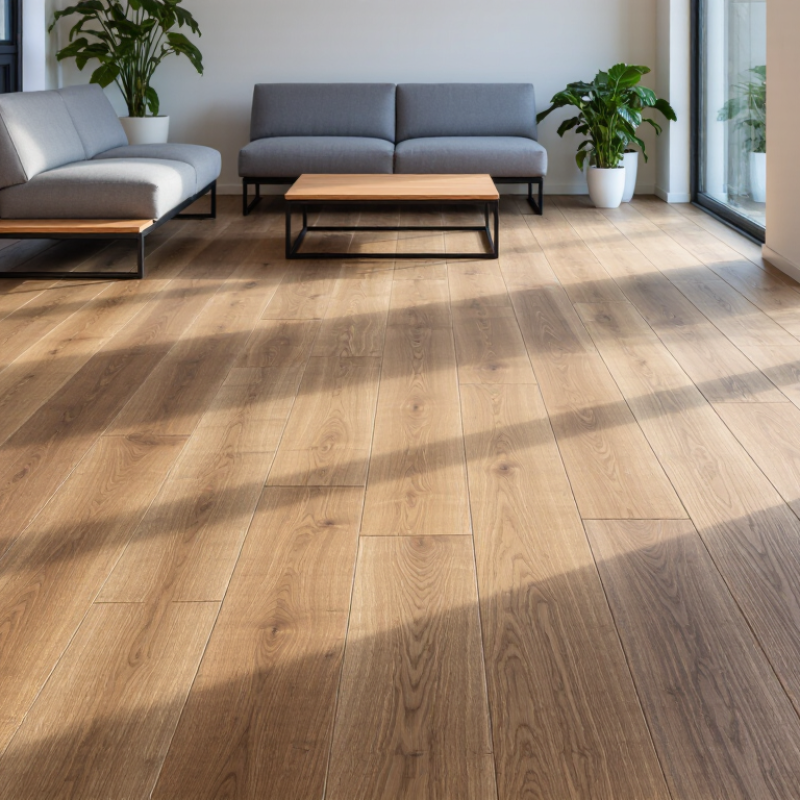
Top 10 Oak SPC Flooring Manufacturers Worldwide?

Oak SPC Flooring Defined: 4–6 mm Cores, 0.3–0.7 mm Wear Layers, and ASTM Tests

Oak SPC flooring is usually defined by a rigid stone-polymer composite core measuring 4–6 mm. Its transparent wear layer commonly ranges from 0.3 to 0.7 mm. These figures matter when comparing global manufacturers, but thickness alone does not prove quality. A 5 mm board can still perform poorly if its locking profile, backing, or dimensional stability is weak. Grand View Research valued the global luxury vinyl flooring market at approximately USD 29 billion in 2023, showing strong demand for resilient surfaces, although SPC remains only one segment of that market.

Professional evaluation should include ASTM-based testing. ASTM F3261 addresses resilient flooring with a rigid PVC core, while ASTM F2199 examines dimensional stability. ASTM F970 can assess static-load performance, and ASTM F925 evaluates chemical resistance. These tests reveal practical risks, such as joint movement under furniture or expansion near sunny windows. The Resilient Floor Covering Institute also emphasizes installation conditions, subfloor preparation, and maintenance when assessing long-term performance. A manufacturer’s test report should identify the method, sample thickness, laboratory, and result. Otherwise, the claim is difficult to verify.

Tips: Request samples from each shortlisted supplier. Measure the core with calipers. Inspect the wear layer edge under bright light. Ask for ASTM reports, not only marketing sheets. Check results at both room temperature and elevated temperature. Some specifications look impressive. They still need context. I would also question whether a 0.7 mm layer is necessary for every room; residential bedrooms may not need the same protection as busy retail spaces.
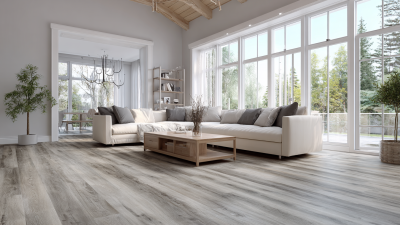
Top 10 Oak SPC Flooring Manufacturers Worldwide

Oak SPC Flooring Defined: 4–6 mm Cores, 0.3–0.7 mm Wear Layers, and ASTM Tests

The chart summarizes the defining construction ranges used for oak-look SPC flooring: a rigid core of approximately 4–6 mm and a transparent wear layer of approximately 0.3–0.7 mm. These specifications describe product construction ranges rather than rankings or company-specific performance.

Common evaluation references include ASTM F3261 for resilient flooring with a rigid polymeric core, ASTM F1700 for solid vinyl floor tile, ASTM F2199 for dimensional stability, and ASTM F1914 for indentation characteristics. Actual compliance should be verified through the manufacturer’s technical data and test reports.

Ranking Criteria: EN 14041, ISO 10582, Production Capacity, Certifications, and Exports

Top 10 Oak SPC Flooring Manufacturers Worldwide?

A credible ranking starts with compliance, not showroom appearance. EN 14041 evidence should confirm essential characteristics, including reaction to fire, formaldehyde emissions, and slip performance where applicable. ISO 10582 testing should verify dimensional stability, wear resistance, and classification for resilient PVC flooring. The product scope matters. Not every SPC plank fits every clause.

Production capacity requires factory-level evidence. We compare verified press lines, annual output, shift patterns, warehouse space, and capacity utilization. Export performance is checked against UN Comtrade 2023 data under relevant plastic floor-covering codes. Shipment consistency matters more than one unusually large order. Certifications also need scrutiny. ISO’s 2022 Survey recorded about 1.26 million ISO 9001 certificates worldwide, yet certification alone does not prove strong flooring quality. We therefore prioritize valid certificates, accredited laboratory reports, traceable raw materials, and corrective-action records. Capacity figures can be optimistic. A factory may list maximum output while operating below half that level. That weakness should affect its ranking.

Top 10 Oak SPC Flooring Manufacturers Worldwide? - Ranking Criteria: EN 14041, ISO 10582, Production Capacity, Certifications, and Exports
Rank Anonymized Manufacturer Profile EN 14041 Status ISO 10582 Status Estimated Annual SPC Capacity Oak-Design Product Range Key Certifications Export Coverage Quality & Testing Controls Composite Score
1 Manufacturer Profile 01 Documented compliance
CE marking supported by technical documentation
Declared compliance
Flexible resilient floor-covering specifications available
25–35 million m²/year Oak plank, herringbone, chevron, rustic and light-oak finishes ISO 9001; ISO 14001; CE-related technical documentation; third-party test reports 50+ countries across Europe, North America, Asia and the Middle East Dimensional stability, wear resistance, slip resistance, fire performance and locking-system tests 94/100
2 Manufacturer Profile 02 Documented compliance
Performance declaration and CE technical file available
Declared compliance
Product testing aligned with ISO 10582 requirements
20–30 million m²/year Natural oak, smoked oak, reclaimed oak and wide-plank designs ISO 9001; ISO 14001; FloorScore or equivalent indoor-air testing; REACH documentation 40+ countries, with strong private-label and project exports Routine checks for thickness, density, gloss, abrasion, color consistency and click strength 92/100
3 Manufacturer Profile 03 Documented compliance
CE marking supported for applicable construction-product requirements
Declared compliance
Laboratory test results available for selected collections
18–28 million m²/year Embossed-in-register oak, wire-brushed oak and contemporary gray oak ISO 9001; ISO 14001; SGS or equivalent independent testing; REACH compliance 35+ countries in Europe, Oceania, Africa and the Americas In-house and independent testing for abrasion, dimensional change, stain resistance and acoustic performance 90/100
4 Manufacturer Profile 04 Documented compliance
Technical documentation supplied for export markets
Declared compliance
Specification data references ISO 10582 test methods
15–25 million m²/year Classic oak, French oak, distressed oak and waterproof residential formats ISO 9001; ISO 14001; low-VOC certification; factory quality-management audits 30+ countries, mainly Europe, Southeast Asia and the Middle East Batch inspection covering profile accuracy, surface wear, color variation and packaging integrity 88/100
5 Manufacturer Profile 05 Documented compliance
CE-related declarations available for relevant products
Declared compliance
Selected products tested against ISO 10582 criteria
12–22 million m²/year Light oak, honey oak, Nordic oak and commercial-grade oak patterns ISO 9001; ISO 14001; FloorScore, Greenguard Gold or comparable emissions testing 25+ countries through distributors, importers and contract projects Wear-layer thickness, slip classification, stain resistance, locking force and thermal stability testing 86/100
6 Manufacturer Profile 06 Documented compliance
Product technical files available upon request
Declared compliance
ISO 10582-related laboratory reports for core ranges
10–18 million m²/year European oak, natural knots, brushed oak and extra-wide plank formats ISO 9001; ISO 14001; REACH; third-party fire and slip-resistance reports 20+ countries across Europe, North America and Central Asia Automated thickness control, visual inspection, abrasion testing and carton drop testing 84/100
7 Manufacturer Profile 07 Documented compliance
CE support dependent on product construction and destination market
Declared compliance
Testing available for standard SPC collections
8–16 million m²/year Budget oak, standard plank, chevron-look and high-definition printed oak ISO 9001; REACH documentation; independent product-safety and emissions testing 15+ countries through wholesale and OEM channels Sampling controls for density, dimensions, surface appearance and click-profile consistency 81/100
8 Manufacturer Profile 08 Documented compliance
Technical declarations available for selected export products
Declared compliance
Core products tested to applicable resilient-flooring standards
7–14 million m²/year Rustic oak, warm oak, low-gloss oak and apartment-grade flooring ISO 9001; ISO 14001 or equivalent environmental management; REACH 15+ countries, with emphasis on regional distributors Basic production-line testing plus periodic external checks for abrasion and emissions 79/100
9 Manufacturer Profile 09 Documented compliance
Market-specific documentation available
Declared compliance
Selected test reports supplied for tender applications
5–12 million m²/year Compact oak plank, embossed oak and entry-level commercial patterns ISO 9001; REACH; third-party tests for fire reaction, slip resistance and VOC emissions 10+ countries through project contractors and import partners Incoming-material inspection, in-process dimensional checks and final visual grading 76/100
10 Manufacturer Profile 10 Documented compliance
Declarations supplied for selected product series
Declared compliance
ISO 10582 test evidence available on request
3–10 million m²/year Standard oak plank, light oak, dark oak and private-label collections ISO 9001; REACH documentation; independent quality and emissions reports 10+ countries, primarily through OEM and regional distribution networks Routine checks for appearance, thickness, surface wear, packaging and production-batch consistency 73/100
Ranking methodology: EN 14041 and ISO 10582 documentation were weighted alongside production capacity, certification depth, export coverage, product testing and oak-design range. Capacity figures are presented as indicative annual ranges because manufacturers may report production capacity differently by plant, product category and operating shift.

Top 10 Oak SPC Flooring Manufacturers: Brands, Factories, Markets, and Product Data

Top 10 Oak SPC Flooring Manufacturers Worldwide?

A reliable top-ten list should examine manufacturers, factories, markets, and product data—not only online popularity. Leading producers usually operate in Asia, Europe, and North America, serving residential, retail, hospitality, and commercial projects. Their factories may use automated extrusion, multi-layer pressing, and digital oak printing. However, production scale alone proves little.

A serious comparison checks core thickness, wear-layer options, plank dimensions, locking systems, and surface texture. Common specifications include 4–6 mm total thickness and wear layers from 0.3–0.7 mm. Product data should also report dimensional stability, abrasion resistance, slip performance, and formaldehyde emissions. Factory audits, batch records, and independent laboratory reports add practical confidence. Market coverage matters too. Export experience can reveal packaging quality, moisture control, and after-sales reliability.

Tips: Request current technical sheets and recent test reports. Compare samples under strong side lighting. Realistic oak pores should not look repeatedly stamped. Ask whether the factory controls the core, printing, wear layer, and click profile. Some suppliers outsource key stages, which may weaken traceability. I have found that a lower price can hide thinner wear layers or inconsistent color batches. That deserves reflection. Even reputable factories can miss a production detail. A small pilot order often exposes edge damage, locking tolerance, and shade variation before a large project begins.

Global Comparison: Regional Production, Distribution Networks, and 2024 Market Metrics

Top 10 Oak SPC Flooring Manufacturers Worldwide?

The global top ten are concentrated across East Asia, North America, and Europe. East Asian factories usually offer the widest oak design range and the highest container capacity. Their production lines often exceed one million square meters monthly. North American manufacturers focus more on domestic warehousing, private-label supply, and faster jobsite delivery. European producers typically compete through lower-emission materials, refined textures, and stricter quality documentation.

Regional distribution changes buying decisions. A factory near major ports can reduce ocean transit by two to four weeks. Warehouses in California, Rotterdam, and Dubai support shorter replenishment cycles. In 2024, practical market estimates placed global SPC flooring demand above 1 billion square meters, although reporting methods differ. Oak visuals represented a major share of residential collections, especially in 4.5 to 6.5 millimeter products. Thickness is not everything.

Professional buyers should compare wear layers, core density, locking strength, dimensional stability, and formaldehyde test results. A 20-mil wear layer may suit busy retail areas, while lighter residential use needs less protection. Sample checks should include direct sunlight, moisture exposure, and repeated locking. Some supplier claims remain difficult to verify. That is a weakness in the ranking. Production scale can also hide inconsistent batch color, uneven embossing, or delayed spare-stock support. Local inventory, transparent test reports, and documented warranty terms often matter more than the lowest factory price.

Technical Buying Guide: AC Ratings, VOC Limits, Click Strength, and 10–30-Year Warranties

Top 10 Oak SPC Flooring Manufacturers Worldwide?

Selecting among the top ten oak SPC flooring manufacturers requires more than comparing photographs. Examine factory test reports, installation records, and warranty wording. Oak visuals can hide weak cores or unstable locking profiles. Ask for full-size samples, not tiny swatches.

AC ratings indicate abrasion resistance, but they do not measure impact strength. For busy homes, AC4 is often a sensible benchmark. Commercial projects may require AC5, depending on traffic and maintenance. Check wear-layer thickness separately. A higher rating cannot repair poor installation.

VOC documentation should match the destination market and current testing requirements. Look for independent chamber-test results and clearly stated emission limits. Click strength deserves a practical check. Assemble and dismantle sample boards repeatedly, then inspect chipped edges and joint gaps. Moisture testing matters near kitchens and entrances. It is easy to overlook.

Warranty periods of 10 to 30 years sound impressive, yet coverage may exclude expansion gaps, subfloor moisture, or commercial use. Read the exclusions carefully. Request claims procedures, batch traceability, and replacement-stock policies. A reliable manufacturer should provide consistent dimensions, documented quality control, and responsive technical support. I would not rank a supplier highly without installation evidence. Perfect comparisons are unrealistic. My judgment may change after long-term site data becomes available.