Why Choose PVC Marble Sheet for Global Projects?
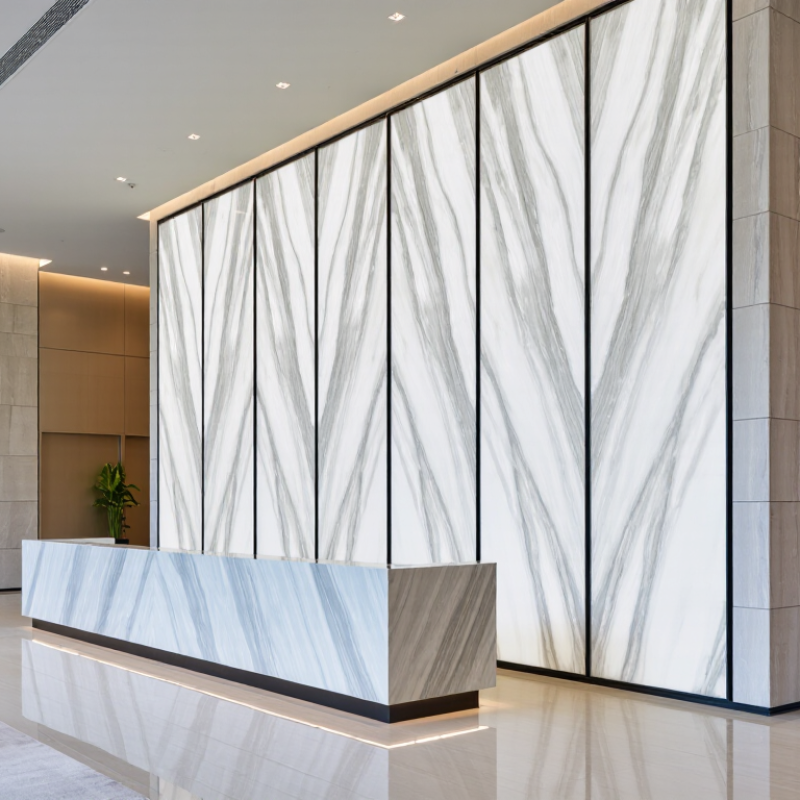
Global construction is becoming more demanding. Projects need decorative surfaces that travel well, install quickly, and perform across different climates. Pvc Marble Sheet answers part of that need. Its lightweight structure can reduce handling effort compared with natural stone. Large panels also create fewer visible joints on hotel walls, retail counters, and elevator interiors.
The global PVC market provides useful context. Fortune Business Insights valued it at about USD 45.08 billion in 2023. The report projects approximately USD 66.09 billion by 2032. Growth is closely linked to construction, renovation, and infrastructure demand. Still, market growth does not prove every PVC product is sustainable. That distinction matters. Product quality varies widely.
Patrick Moore, an environmental scientist and longtime PVC advocate, described PVC as “a safe, durable, and versatile material.” His statement supports the material’s practical strengths, but responsible buyers should ask harder questions. Are emissions tested? Does the product include recycled content? Can suppliers provide fire ratings, VOC data, and installation guidance? These details influence real project performance more than a glossy surface.
The United Nations Environment Programme reported that buildings and construction represented about 37% of global energy-related and process CO2 emissions in 2022. Therefore, choosing Pvc Marble Sheet should involve more than appearance or purchase price. Weight, service life, maintenance, waste, and end-of-life options deserve review. The material is not a universal answer. Yet, with verified specifications and disciplined procurement, it can offer a practical balance between marble-like design, transport efficiency, and installation speed for international projects.
Why Choose PVC Marble Sheet for Global Projects?
What Is PVC Marble Sheet and How Is It Made?
PVC marble sheet is a lightweight decorative panel made from PVC resin, mineral filler, pigments, and performance additives. It is not natural stone. That distinction matters. Manufacturers blend these materials, heat the mixture, and form it through extrusion or calendering. The result is a flat panel with consistent thickness and reduced weight.
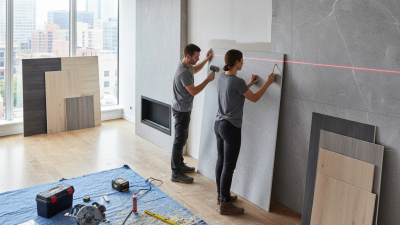
A marble pattern is usually printed onto the surface with controlled rollers or digital equipment. A protective UV coating may then improve color stability and cleaning resistance. Some panels receive embossing, which creates a subtle stone-like texture under the hand. During site work, installers cut the sheets with ordinary panel tools and fix them over suitable, level surfaces. My project experience suggests that accurate wall preparation matters more than the printed pattern. Uneven substrates can make even a premium-looking sheet appear poorly finished.
Tips: Check the technical data before ordering. Confirm thickness, fire performance, moisture resistance, and installation limits. Request samples in daylight. Colors can look different indoors. Allow the sheets to acclimatize before cutting, especially after long-distance transport. Also test the adhesive on a small area first. Small oversights become expensive repairs. PVC marble sheet can support efficient global projects, but specifications should match the building, climate, and local safety requirements.
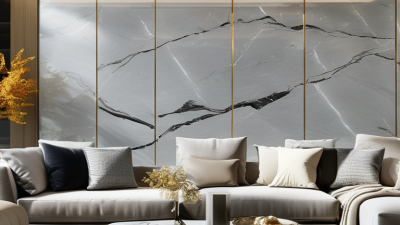
PVC marble sheet is a decorative wall and ceiling panel made from polyvinyl chloride resin, mineral fillers, pigments, and stabilizers. The materials are compounded, heated, mixed, formed through calendering or extrusion, cooled, cut, and finished with a marble-look surface film or printed pattern.
The chart shows the estimated mass per square metre at common sheet thicknesses, calculated with a representative PVC marble sheet density of 1.40 g/cm³. Lower weight can simplify handling, transportation, and installation, while the final performance depends on the exact formulation, thickness, backing, and surface finish.
Why Choose PVC Marble Sheet for Global Projects?
International construction projects need materials that perform consistently across changing climates, shipping conditions, and installation teams. PVC marble sheets offer a practical balance of low weight, moisture resistance, and visual flexibility. Their lighter structure can reduce handling effort on upper floors and simplify transport planning. They also resist common bathroom humidity and occasional surface splashes when installed correctly.
Performance depends on more than the decorative surface. Buyers should review dimensional stability, impact resistance, scratch behavior, and fire-performance documentation. These details matter in hotels, healthcare spaces, retail interiors, and prefabricated units. In coastal regions, moisture-resistant panels can reduce maintenance concerns, but poor sealing may still allow water behind the sheet. That weakness is easy to overlook.
Tips: Request independent test reports before approval. Check whether the stated results match the destination market’s requirements. Ask for installation guidance covering adhesive compatibility, joint treatment, cutting, and substrate preparation. A sample panel should face realistic checks, including cleaning, edge impact, and temperature changes. Do not judge quality by appearance alone. A flawless pattern can hide poor dimensional control. Also, international supply chains need stable packaging, clear labeling, and replacement planning. These points seem minor. They can prevent expensive site delays.
| Performance Feature | Typical Data for PVC Marble Sheets | Relevant Test or Reference | Value for International Construction Projects |
|---|---|---|---|
| Material Composition | Rigid PVC-based decorative sheet with mineral fillers, pigments and surface coatings. Formulations vary by application. | Supplier technical data sheet and product composition declaration | Allows project teams to select options for wall cladding, ceilings, furniture panels and interior renovation work. |
| Common Thickness | Approximately 2–5 mm for many interior decorative applications; thicker constructions may also be available. | Measured thickness according to the applicable product specification | Provides a balance between visual coverage, handling convenience and available installation space. |
| Density | Typically about 1.3–1.6 g/cm³, depending on fillers, backing structure and formulation. | ISO 1183 or an equivalent density test method | Supports weight planning for international freight, storage, lifting and substrate design. |
| Approximate Surface Weight | About 2.6–8.0 kg/m² for 2–5 mm sheets at the density range above, excluding protective film and packaging. | Calculated as density × thickness; confirm with the product data sheet | Lower mass can reduce handling effort and may simplify installation in refurbishment projects. |
| Water Absorption | Generally very low because PVC is non-hygroscopic; many rigid PVC products record values below 1% under standardized immersion tests. | ISO 62 or ASTM D570, depending on the project specification | Suitable for humid interiors such as bathrooms, kitchens and hospitality areas when joints and substrates are correctly detailed. |
| Thermal Conductivity | Approximately 0.15–0.25 W/(m·K) for many solid PVC-based materials; actual values vary with fillers and structure. | ISO 8302, ASTM C177 or an equivalent thermal test method | Provides limited thermal resistance and a warmer touch than many metal surfaces, but should not replace specified insulation. |
| Dimensional Stability | PVC expands and contracts with temperature; a representative linear expansion range is approximately 5–8 × 10⁻⁵/°C. | ISO 11359 or ASTM D696 | Expansion gaps, suitable adhesives and stable substrates are important in projects exposed to large climate variations. |
| Moisture and Corrosion Resistance | PVC itself does not rust and is resistant to moisture; backing materials, edge treatments and installation systems may have different resistance. | Water-resistance, chemical-resistance and system compatibility tests | Useful in coastal, humid or renovation environments where metallic decorative surfaces may require additional protection. |
| Chemical and Cleaning Resistance | Typically resistant to mild detergents and many household cleaning agents; strong solvents, concentrated acids and heat may damage the surface. | ISO 2812, ISO 4628 or the project’s chemical-resistance protocol | Supports use in residential, retail and hospitality interiors, subject to approved cleaning products. |
| Fire Performance | No universal rating applies. Fire behavior depends on formulation, thickness, backing and installation; certified classifications must be project-specific. | EN 13501-1, ASTM E84, ASTM E662 or locally required fire tests | Enables compliance planning, but the exact tested assembly must be selected before approval for public or high-occupancy buildings. |
| Slip Resistance | Usually intended for vertical or decorative surfaces rather than floor applications unless a specific slip-resistant system is tested. | EN 13893, DIN 51130 or the applicable flooring standard | Helps prevent inappropriate use and supports correct specification for walls, ceilings and furniture surfaces. |
| UV and Color Stability | Indoor-grade sheets generally provide better color stability than continuously exposed outdoor products; outdoor use requires UV-tested formulation. | ISO 4892-3, ASTM G154 or equivalent accelerated-weathering test | Clarifies whether the material is suitable for interior projects, covered exterior areas or direct sunlight exposure. |
| Fabrication and Installation | Can generally be cut, drilled and bonded using tools and adhesives compatible with PVC; substrate preparation and joint detailing remain essential. | Manufacturer installation instructions and adhesive compatibility testing | May reduce wet trades and installation time, which is beneficial for international renovations and fast-track interiors. |
| Acoustic Contribution | A thin solid sheet normally provides limited sound absorption; acoustic performance mainly comes from the wall, cavity or backing system. | ISO 354, ISO 10140 or project-specific acoustic testing | Prevents overestimating performance and helps designers combine the decorative sheet with an appropriate acoustic backing. |
| Indoor Air Quality Considerations | Emissions depend on resin, additives, printing layers, adhesives and production controls; low-emission documentation should be requested. | ISO 16000 series, EN 16516 or applicable regional VOC requirements | Supports green-building assessments and healthier interior specifications across different markets. |
| Recyclability and Waste Management | PVC can be mechanically recycled where suitable collection and processing systems exist; composite layers and adhesives may complicate recycling. | Local waste regulations and project environmental requirements | Encourages responsible procurement, installation waste planning and compliance with regional sustainability policies. |
Note: Values are representative ranges for generic PVC-based marble decorative sheets. Final selection should be based on the exact product’s technical data sheet, certified test reports, installation system and local building regulations.
For global projects, PVC marble sheet is often selected because logistics and installation matter as much as appearance. Grand View Research valued the global natural stone market at about USD 33 billion in 2023, showing strong demand for stone finishes. Yet natural marble is heavy, porous, and usually requires sealing. A large slab can also increase shipping costs and handling risks. PVC marble sheet is considerably lighter, arrives in consistent sizes, and can be cut with ordinary site tools. It creates fewer installation delays in hotel corridors, retail interiors, and renovated apartments. The surface also resists routine moisture better than untreated marble.
Natural marble remains stronger against heat and offers genuine mineral variation. Its veining is never perfectly repeated. That matters in luxury interiors. However, marble can stain from coffee, oil, or acidic cleaners, especially around kitchens and washrooms. PVC marble sheet avoids many of these maintenance concerns, but it is not indestructible. The plastic surface may scratch, dent, or deform near continuous high heat. That is the uncomfortable part. ASTM-based testing should confirm abrasion, impact, and fire performance for the intended application. A 2023 report from Grand View Research estimated the PVC wall panel market would grow at over 6% annually through 2030, reflecting practical demand for lightweight surfaces. Still, market growth does not prove equal quality. Project teams should inspect thickness, backing stability, joint details, and cleaning instructions before approval. I would not specify it beside commercial cooking equipment without additional protection.
Global projects need more than a marble-like appearance. Installation conditions can change sharply between regions. Humidity, temperature, wall quality, and local building rules all affect performance.
The wall should be clean, dry, and reasonably level before fitting. Dust or trapped moisture may weaken the adhesive bond. Sheets should rest indoors before installation, allowing them to adjust to the room temperature. Leave suitable movement gaps near corners and ceilings. These small details matter. Installers should select adhesives compatible with both the sheet and the substrate. Mechanical fixing may also improve stability on uneven walls or in high-traffic areas.
Maintenance is usually simple. A soft cloth, mild detergent, and clean water can remove everyday marks. Abrasive pads may dull the surface. Strong solvents can damage the printed layer or soften the material. A sample test is safer. Always check the supplier’s technical data and the project’s local requirements.
Safety needs careful review across borders. Confirm fire-performance classifications, indoor-air emissions, and installation rules before ordering. Requirements may differ between hotels, hospitals, homes, and public buildings. Wet areas also need sealed joints, especially around sinks and showers. PVC marble sheet is not automatically suitable for every application.
One detail is easy to miss: a beautiful panel cannot correct poor ventilation or hidden wall moisture. Field checks should record batch details, surface conditions, and installer instructions. Mistakes happen. A documented process makes them easier to identify and correct.