Top 10 Waterproof SPC Flooring Suppliers Worldwide
Waterproof SPC Flooring has moved from a specialist renovation option into a mainstream resilient-flooring category. Grand View Research reported that the global resilient flooring market was valued at approximately USD 40.6 billion in 2023, with continued growth expected through 2030. This wider market includes luxury vinyl tile, sheet flooring, and SPC products. The numbers show momentum, but they do not identify dependable suppliers by themselves.
That requires closer examination. A serious supplier should demonstrate stable core density, dimensional control, wear-layer specifications, and consistent locking profiles. ASTM and ISO test references can strengthen product comparisons, while transparent technical sheets reveal more than attractive showroom photography. Water resistance also needs careful wording. The SPC core may resist water, but poorly sealed joints, damaged edges, or an uneven subfloor can still create practical problems.
Details matter.
This guide reviews ten Waterproof SPC Flooring suppliers serving international buyers, distributors, contractors, and project developers. The assessment considers manufacturing experience, export capability, product certification, warranty clarity, customization, quality control, and after-sales support. Reports from Grand View Research and Fortune Business Insights indicate sustained demand for resilient and vinyl flooring, driven partly by renovation activity and easier maintenance. Yet market forecasts can look cleaner than real projects. A supplier may publish impressive capacity while offering inconsistent batch matching or slow technical support. Therefore, this selection is not treated as an unquestionable ranking. It is a practical comparison, built around evidence that purchasing teams can verify before placing a container-sized order.
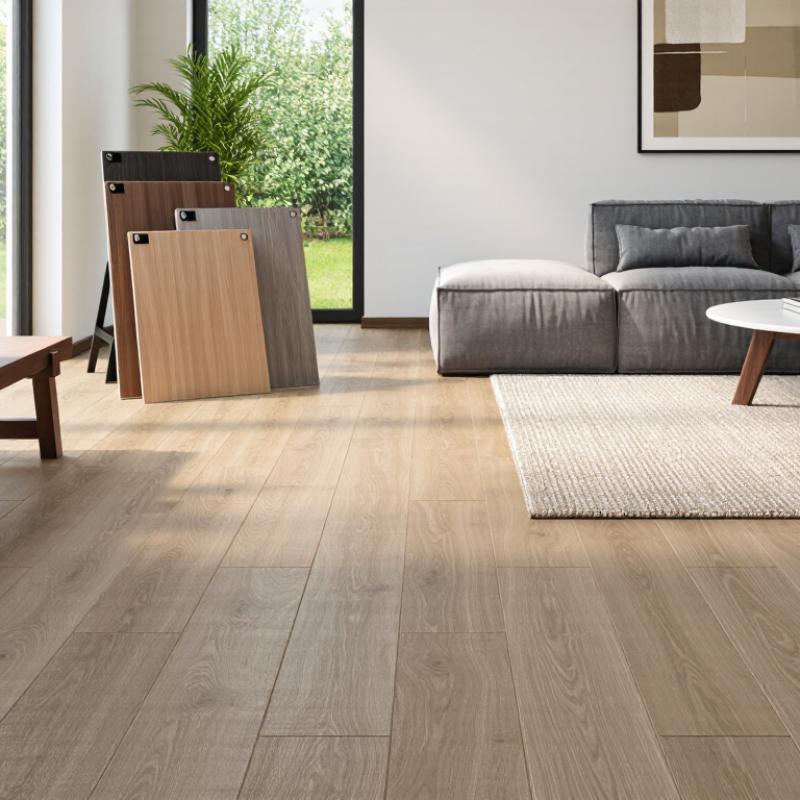
What Waterproof SPC Flooring Is and How It Differs from Other Floors
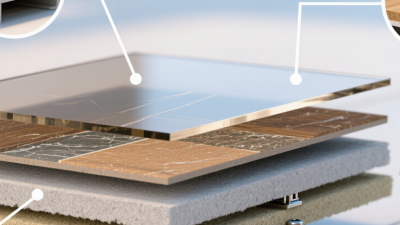
Waterproof SPC flooring is a rigid-core product made from stone powder, PVC, and stabilizing additives. Its dense core resists water absorption better than wood-based flooring. The surface usually includes a printed décor layer and a wear layer for daily protection. Many installers choose it for kitchens, bathrooms, laundry rooms, and busy hallways.
The word “waterproof” needs careful reading. SPC planks may not swell when exposed to moisture, but open joints, damaged edges, and poor subfloors can still cause problems. Water can travel underneath the floor. A properly prepared, dry, and level subfloor remains essential. Expansion gaps also matter, even though the material feels highly stable.
Compared with laminate, SPC has a more moisture-resistant core and usually handles spills with less risk. Laminate often contains compressed wood fibers, which can expand after prolonged exposure. Hardwood offers natural warmth and can be refinished, but it needs more moisture control. Ceramic tile is highly water-resistant and very durable, yet it feels harder and colder underfoot. SPC is warmer and faster to install, although its rigid surface may transmit sound without suitable underlayment.
Supplier quality varies in locking strength, wear-layer thickness, dimensional stability, and testing documentation. A low price can hide weak joints or inconsistent thickness. I have seen attractive samples perform poorly when installation guidance was ignored. That is a useful warning: the flooring is only part of the system.
Standards for Evaluating Global SPC Flooring Suppliers
When evaluating global SPC flooring suppliers, waterproof performance should begin with evidence, not advertising. Request independent test reports using recognized ASTM, EN, or ISO methods. Check water absorption, dimensional stability, slip resistance, and joint performance. A strong supplier explains the test conditions clearly. Look for laboratory names, dates, sample codes, and pass limits. “Waterproof” may describe the core only. Seams, subfloors, and installation still matter.
Practical experience reveals details that brochures often omit. Examine locking edges after repeated wetting and drying. Check whether the decorative layer remains stable near bathrooms, kitchens, and entrances. Ask for production samples from different batches. Compare thickness, plank weight, click strength, and surface texture. Reliable suppliers provide traceability, quality-control records, and clear warranty exclusions. They should also explain packaging, container loading, customs documents, and replacement procedures. No checklist is perfect. Human inspection still catches uncomfortable surprises.
Tips: Ask for a small trial order before committing to volume. Record plank dimensions and color under natural light. Confirm the recommended underlayment and expansion gaps. Interview recent buyers when possible. A low price can become expensive after rejected cartons, delayed shipments, or installation failures.
Top 10 Waterproof SPC Flooring Suppliers Worldwide
Standards for Evaluating Global SPC Flooring Suppliers
This evaluation framework assigns a 100-point weighting to the core criteria used to assess waterproof SPC flooring suppliers. The criteria reference widely used flooring, performance, safety, and environmental standards, including ISO 10582, ISO 10874, EN 16511, ASTM F1700, ISO 24343-1, ISO 4918, ISO 105-B02, EN 14041, and ISO 23999.
Profiles of the Top 10 Waterproof SPC Flooring Suppliers Worldwide
The ten supplier profiles examine manufacturers across Asia, Europe, and North America, focusing on waterproof performance, production scale, certification, and export reliability. Grand View Research estimates the global stone plastic composite flooring market could expand at about 7.4% annually from 2024 to 2030. That growth raises the standard for every supplier.
Several profiled manufacturers operate large automated lines and offer rigid-core boards with click-lock installation. Others compete through embossed wood textures, low-VOC formulations, or shorter delivery schedules. Their technical records should show water-absorption results, wear-layer thickness, dimensional stability, and independent laboratory testing. Product samples reveal details that brochures often miss: uneven locking edges, gloss variation, or hollow sounds underfoot.
Supply-chain strength also separates the leading ten. Public trade data and industry reports indicate continued manufacturing concentration in East Asia, while European and North American suppliers often emphasize regional stock and compliance documentation. Fortune Business Insights describes Asia Pacific as a major growth region for resilient flooring, supported by construction and renovation demand. Still, “top” remains relative. A supplier with excellent factory capacity may provide weak after-sales support. Another may offer attractive pricing but limited batch consistency. Buyers should verify recent test reports, production dates, pallet protection, and warranty terms before ranking any supplier.
How to Compare Products, Certifications, Pricing, and Service♀♀♀♀♀♀
When comparing the top 10 waterproof SPC flooring suppliers worldwide, inspect the product before trusting the catalog. Check the SPC core, wear layer, total thickness, and locking profile. A thicker board is not automatically better. Ask for laboratory reports covering dimensional stability, slip resistance, fire performance, and indoor emissions. Confirm which standards the reports follow, such as ASTM, EN, or ISO methods. Verify certificate numbers with the issuing laboratory. Screenshots are not enough.
Pricing needs a wider view. Request samples, technical data, minimum order quantities, packaging details, and a complete landed-cost estimate. Include freight, insurance, duties, and replacement risks. Compare equal specifications, not only the price per square meter. A low quotation may exclude edge treatments or stronger wear layers. I have seen attractive offers become expensive after damaged cartons arrived. That experience still makes me cautious.
Tips: Order samples from several suppliers and test them under the same conditions. Place them near a sunny window and wipe spills repeatedly. Check color changes, joint movement, surface marks, and odor. Ask how suppliers inspect each production batch and record moisture controls. Service matters after payment. Measure response time, complaint procedures, spare-stock support, and installation guidance. A clear warranty should state exclusions and claim evidence. No supplier gets everything perfect, including my own comparison process. Recheck assumptions before choosing.
Top 10 Waterproof SPC Flooring Suppliers Worldwide – How to Compare Products, Certifications, Pricing, and Service
Anonymous supplier benchmark profiles for comparing common SPC flooring specifications, documentation, commercial terms, and after-sales capability.
| Rank |
Supplier Profile |
Primary Supply Region |
Typical SPC Construction |
Wear Layer |
Common Plank Size |
Waterproof Product Claim |
Typical Certifications / Documents |
Indicative Export Price
(USD/m²) |
Typical MOQ |
Estimated Lead Time |
Warranty Range |
Service Rating |
| 1 |
Supplier Profile 01 |
East Asia |
Rigid SPC core, printed decor film, UV coating, attached IXPE underlay |
0.50 mm |
152 × 1220 mm |
Suitable for wet-area residential applications when joints and perimeter are correctly installed |
CE
REACH
ISO 9001
Test reports
|
$10.50–$15.50 |
500–1,000 m² |
25–35 days |
20–25 years residential |
★★★★★ |
| 2 |
Supplier Profile 02 |
Southeast Asia |
High-density limestone-polymer core with embossed surface and click-lock joint |
0.30–0.50 mm |
180 × 1220 mm |
Water-resistant core; installation details determine complete floor-system performance |
CE
ISO 9001
EN 14041
VOC report
|
$9.00–$13.80 |
800–1,500 m² |
30–45 days |
15–25 years residential |
★★★★☆ |
| 3 |
Supplier Profile 03 |
North America |
Commercial-grade SPC plank with enhanced wear coating and integrated acoustic backing |
0.50–0.70 mm |
228 × 1520 mm |
Designed for moisture-prone interiors; standing water and subfloor moisture require control |
Flooring safety tests
ASTM reports
Low VOC
ISO documents
|
$16.00–$24.00 |
300–800 m² |
20–30 days |
25–30 years residential |
★★★★★ |
| 4 |
Supplier Profile 04 |
Western Europe |
Low-emission SPC core with synchronized wood texture and reinforced click profile |
0.30–0.55 mm |
180 × 1220 mm |
Moisture-resistant product system with documented dimensional-stability testing |
CE
REACH
EN 16511
EPD available
|
$19.00–$29.00 |
200–500 m² |
15–25 days |
20–30 years residential |
★★★★★ |
| 5 |
Supplier Profile 05 |
Eastern Europe |
Rigid-core plank with factory-applied underlay and residential/commercial surface options |
0.30–0.50 mm |
180 × 1220 mm |
Water-resistant flooring for kitchens, bathrooms, and other interior areas subject to normal moisture |
CE
EN test reports
REACH
VOC testing
|
$14.00–$21.00 |
300–700 m² |
20–35 days |
15–25 years residential |
★★★★☆ |
| 6 |
Supplier Profile 06 |
East Asia |
Economy SPC plank with standard click system and optional IXPE or EVA backing |
0.20–0.30 mm |
152 × 1220 mm |
Waterproof core material; joint sealing and subfloor preparation remain essential |
CE
Basic VOC report
REACH declaration
|
$6.80–$10.50 |
1,000–2,000 m² |
30–50 days |
10–20 years residential |
★★★★☆ |
| 7 |
Supplier Profile 07 |
South Asia |
Mid-range SPC flooring with limestone-filled core, embossed finish, and drop-lock option |
0.30–0.50 mm |
180 × 1220 mm |
Suitable for ordinary indoor wet exposure when installed according to manufacturer instructions |
CE
ISO 9001
REACH
Slip test
|
$8.50–$13.00 |
800–1,500 m² |
35–50 days |
15–20 years residential |
★★★☆☆ |
| 8 |
Supplier Profile 08 |
Oceania |
Premium rigid-core flooring with acoustic backing, low-gloss coating, and commercial wear layer |
0.50–0.70 mm |
228 × 1520 mm |
Moisture-resistant construction tested for dimensional stability and locking-joint performance |
Low VOC
Slip resistance
ISO documents
Product testing
|
$18.00–$27.00 |
250–600 m² |
20–35 days |
20–30 years residential |
★★★★☆ |
| 9 |
Supplier Profile 09 |
Middle East |
Heavy-duty SPC plank with enhanced UV coating for warm-climate interior applications |
0.50 mm |
180 × 1220 mm |
Waterproof core with climate-adapted storage and installation requirements |
CE
EN reports
REACH
Fire-test report
|
$11.50–$17.50 |
500–1,000 m² |
30–45 days |
15–25 years residential |
★★★★☆ |
| 10 |
Supplier Profile 10 |
Latin America |
Value-oriented SPC flooring with standard wear layer and multiple residential patterns |
0.20–0.30 mm |
152 × 1220 mm |
Water-resistant and easy-clean surface; wet-room installation requires perimeter protection |
CE
Basic VOC report
REACH declaration
|
$7.50–$11.50 |
800–1,500 m² |
35–55 days |
10–20 years residential |
★★★☆☆ |
Comparison note: The figures above are indicative market benchmarks for anonymous supplier profiles, not quotations or verified claims from named companies. Actual pricing depends on volume, thickness, wear layer, backing, packaging, destination, Incoterms, tooling, and currency. Before purchasing, request current technical data sheets, independent test reports, batch samples, warranty terms, and confirmation of the applicable certification scope.



 Send Email
 whatsapp
 Whatsapp
